KASHMIR TRAVEL FORUM
Showing posts with label photography. Show all posts

Saturday, April 11, 2026

Malaysia-to-kashmir-travel

MALAYSIA TO KASHMIR:


Why is spring in Kashmir so special for Malaysian couples?

After a long winter, Kashmir wakes up in spring. Snow starts melting on the mountains, the air turns cool‑fresh instead of icy, and gardens suddenly fill with colour. For Malaysian couples, it feels like stepping from tropical heat into a gentle, romantic cold with flowers, lakes and snow‑capped peaks all around.


What does a romantic spring day in Srinagar feel like?

Mornings are cool and fresh, with the sun coming through light clouds and snow still visible on distant peaks. You can stroll in Mughal gardens, smell roses and tulips, and sit under huge chinar trees as birds move through the branches. Evenings are perfect for a quiet shikara ride on Dal Lake, watching the city lights reflect on the water.


Which gardens are most romantic to visit in spring?

Nishat Bagh – “Garden of Joy”

Nishat Bagh is a terraced Mughal garden looking over Dal Lake. Couples walk past neat flower beds, fruit trees like peach and plum, and channels of water running under chinar trees. Each terrace has its own design and view; higher levels give wide views of the lake and mountains, especially beautiful at sunset.

Tulip Garden – a sea of colour

In early spring (usually late March to mid‑April), the famous tulip garden in Srinagar opens. Rows of tulips in many colours cover the hillside with the lake and mountains in the background. For honeymoon photos or a first spring trip together, this is one of the most romantic spots in Kashmir.


What is a shikara ride like for couples?

Shikaras are wooden boats with cushioned seats and a canopy. They ferry people between the lake shore and houseboats, but for couples the main attraction is the slow, relaxing ride itself. You glide past floating gardens and houseboats, watch local lake life, and see mountains all around. At sunset, with hot kahwa (Kashmiri tea), it becomes a very intimate, quiet experience.


Which parks and gardens in Srinagar are nice for a relaxed day?

Srinagar is full of small parks and lakeside gardens where locals spend evenings with family:

  • Nehru Park – on a small island in Dal Lake, reached by shikhara. You can sit by the water, try simple activities like boating, or just enjoy the views.

  • Pratap Park – in the city center, popular with students and office workers. It’s a good place to watch local life during a short walk in town.

  • Duck Park (Foreshore Road) – set by the lake with ponds and a clear view towards Mahadev Peak. It’s quieter and good for simple walks and photos.

These parks are not “luxury” spots, but they show the everyday, softer side of Srinagar and are easy to fit into a relaxed day.


Are there nature and wildlife spots close to Srinagar for couples?

Yes. One of the closest nature escapes is Dachigam National Park, about 22 km from the city. The park is framed by green mountains, forested slopes, meadows and streams. It’s mainly known for wildlife like black bears and other mountain animals, but many couples visit for peaceful walks and nature photography rather than hard trekking.


What local food should Malaysian visitors try in Srinagar?

Srinagar is very friendly for food lovers:

  • You’ll see many small shops grilling mutton kebabs; the smoke and smell fill the evening streets.

  • In winter mornings, locals eat harisa, a slow‑cooked meat dish served hot, which is rich and comforting in the cold.

  • For a romantic meal, you can also try a simplified version of wazwan, the traditional multi‑course Kashmiri feast, in selected restaurants.

All of this is halal by default, which makes it easier for Malaysian Muslim travellers.


Are there romantic day trips outside Srinagar?

Yes. One charming spring day trip is to Verinag Spring in Anantnag district, around 78 km from Srinagar. The main attraction is a clear spring surrounded by a Mughal‑style garden built by Emperor Jehangir. Flowers sway in the light breeze, water is crystal‑clear, and the setting is quiet and relaxing – a good place for couples who want to spend a slower day away from the city.


How should a Malaysian couple plan a short romantic spring trip to Kashmir?

For a 5–6 day romantic spring escape, a simple structure is:

  • 2–3 nights in Srinagar (1 N houseboat + hotel) for gardens, shikara rides and city walks.

  • 1 nights in Gulmarg  & 1 N Pahalgam for mountain scenery and quiet stays.

  • One flexible day you can use for a slow park/garden day or a DARA HARWAN/Dachigam outing.

you can add more days if you want to combine Kashmir with Delhi or Agra.


Travelling from Malaysia to kashmir and dreaming of a romantic Winter & Kashmir spring? Share your dates and we’ll send you a custom 6–8 day itinerary in MYR within 1 hour.”  whats app +919990048712; visit website https://kashmir-ladakh-tourism.com/


Friday, March 13, 2020

postcards from kashmir

Today i am posting some of the post cards from Kashmir. they represent the culture and lifestyle of people. before i show you the pictures, you might have already known something about kashmir, Right, Its was a vacationers dream place until it got tangled in political Tension till 2019, after 2020 things started to change in kashmir and peace prevailed in the valley. this year 2024 it saw the highest footfall of tourists as it has some beautiful mountain ranges, people who want to spend time in Mountains its perfect for them. Let's delve into some details;

Kashmir: Beauty and Culture

Natural Beauty: Kashmir is often referred to as "Paradise on Earth" due to its breathtaking natural beauty. It is characterized by lush valleys, picturesque landscapes, pristine lakes, and towering snow-capped mountains. Some of its key features include:

  1. Dal Lake: The iconic Dal Lake in Srinagar is famous for its serene waters and floating gardens. It's a popular tourist attraction where visitors can enjoy Shikara rides and stay in houseboats.

  2. Pahalgam: This charming hill station is surrounded by verdant meadows, thick forests, and the Lidder River. It's a starting point for trekking and adventure sports. places of attraction around pahalgam are Aru valley, Beetab valley, Chandanwari, Martand sun temples, Baisarn & kashmir valley. In  summers visit the Apple orchards to taste a freshly pressed apple juice from the Apple laden trees.


  3. Gulmarg: Known for its world-class ski resorts, Gulmarg boasts stunning alpine landscapes and the highest golf course in the world. The Gulmarg Gondola is one of the highest cable cars globally and offers panoramic views. only drawback at gulmarg is hotels are over priced  in gulmarg, they are old, not well maintained and not worth the price you are paying, as Gulmarg is well connected to srinagar, A day trip is recommended to Gulmarg. other nearby places to Gulmarg is Botapathri & Drung. Botapathri is highly recommended to visit in summers, while Drung in winters to see the frozen waterfall.


  4. Sonmarg: in kashmiri language known as the "Meadow of Gold," Sonmarg is renowned for its alpine flowers, glaciers, and trekking trails. It's a gateway to the Zoji La Pass, connecting Kashmir with Ladakh. Nearby attractions to sonmarg are Zero point, Thajwas Glacier, etc


Cultural Richness: Kashmir's culture is a blend of diverse influences, including Central Asian, Persian, and Indian elements. Its unique cultural aspects include:

  1. Language and Literature: The official language is Urdu, but Kashmiri is widely spoken. The region has a rich literary tradition with poets like Lal Ded and Habba Khatoon contributing to Kashmiri literature.

  2. Cuisine: Kashmiri cuisine is characterized by rich flavors and use of spices. Signature dishes include Rogan Josh (a flavorful curry), Wazwan (a multi-course feast), and various types of rice dishes like Dum Aloo and Yakhni.

  3. Handicrafts: Kashmir is famous for its intricate handicrafts, particularly Pashmina shawls, paper-mâché items, carpets, and woodwork. These crafts reflect the region's artistic excellence.

  4. Music and Dance: Traditional music and dance are an integral part of Kashmir's cultural identity. The region is known for Sufiana Kalam (Sufi music) and the vibrant Rouff dance.

  5. Festivals: Kashmir celebrates a variety of festivals, including Eid, Navroz (Kashmiri New Year), and Shivaratri. The Tulip Festival and the Shikara Festival attract visitors from across the world.

Spiritual Heritage: Kashmir has a deep spiritual heritage, with numerous temples, mosques, and shrines dotting the landscape. Some notable religious sites include:

  1. Shankaracharya Temple: Perched on a hill overlooking Srinagar, this temple is dedicated to Lord Shiva and offers panoramic views of the city and Dal Lake.

  2. Jamia Masjid: A magnificent wooden mosque in Srinagar, renowned for its Indo-Saracenic architecture and serene ambiance.

  3. Amarnath Cave: A holy site for Hindus, this cave shrine houses an ice stalagmite that is worshipped as a representation of Lord Shiva.

  4. Hazratbal Shrine: A significant Muslim shrine that houses a relic believed to be a hair strand of the Prophet Muhammad.

Kashmir's beauty and culture are intertwined, creating a unique and enchanting experience for visitors. The region's natural wonders, artistic traditions, and religious heritage contribute to its allure and make it a place of profound significance. However, it's essential to acknowledge that the region has also faced political challenges and conflicts that have affected its cultural landscape and daily life.

women cooking food at home


In kashmir women are sweet home makers its their utmost duty to take care of other family members and cook delicious food. Doesn't matter whether its a working women or a housewife the prime duty of women remains to look after their family. In the above picture the older lady is cooking "monje haakh" a vegetable dish which is eaten with rice. kashmiri love eating rice that's why they are called "batte mahnu" rice men.


in the saffron fields

Saffron is cultivated as one of the most expensive spice in the world, known for many beneficial uses it has demand in many countries. it is cultivated here in late summers and you can see in the picture how a family is involved in the farms, women & men work together to cultivate saffron. the saffron flowers look purple & beautiful.


Kangri or Firepot is a good friend for winters to give you company & warmth. a essential commodity for all people. as the winter gets colder & colder men take the kangri with burning coals under their poncho type garments to provide them warmth. Kangri is hand made mostly in the village households, thus generating a small amount of seasonal income for people. in the above picture we captured a kangri seller he is from the village and has come on with a bunch of kangris on his shoulder to sell them.


A little shepherd boy driving cattle home, the scene depicts a typical Kashmir village where in evening a little boy is bringing his flock of sheep home. during winter's children have long winter vacation & they also do household chores.

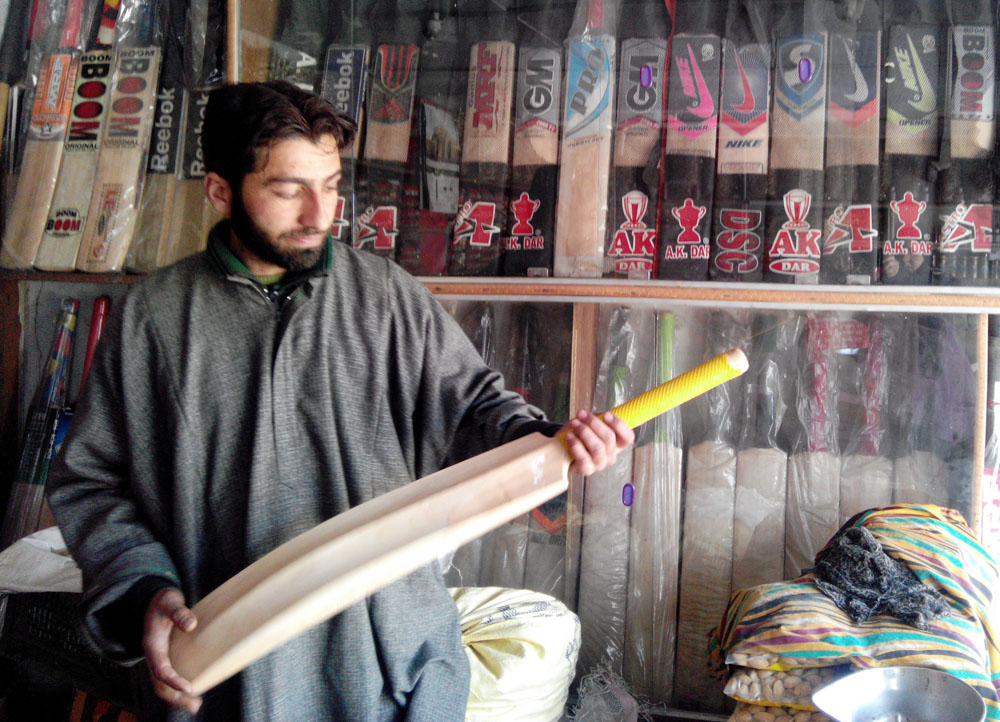
cricket bats "Made in kashmir"
 The cricket bat is a famous product made in Kashmir, the kashmiri willow is used to manufacture these bats. on the way to pahalgam you will see some small factories which manufacture the bats, later these bats are sold in Kashmir and in other parts of India. In the above pic a young man is showing us a newly made cricket bat.
floating market in Dal lake.


 The everyday vegetable market which starts early at dawn for few hours, farmers of the lake come with their loaded boats filled with veggies. it's a nice sight to make your morning beautiful.  visit us again for more pictures of kashmir for more information about kashmir ladakh tour drop us a mail  at  info@kashmir-ladakh-tourism.com